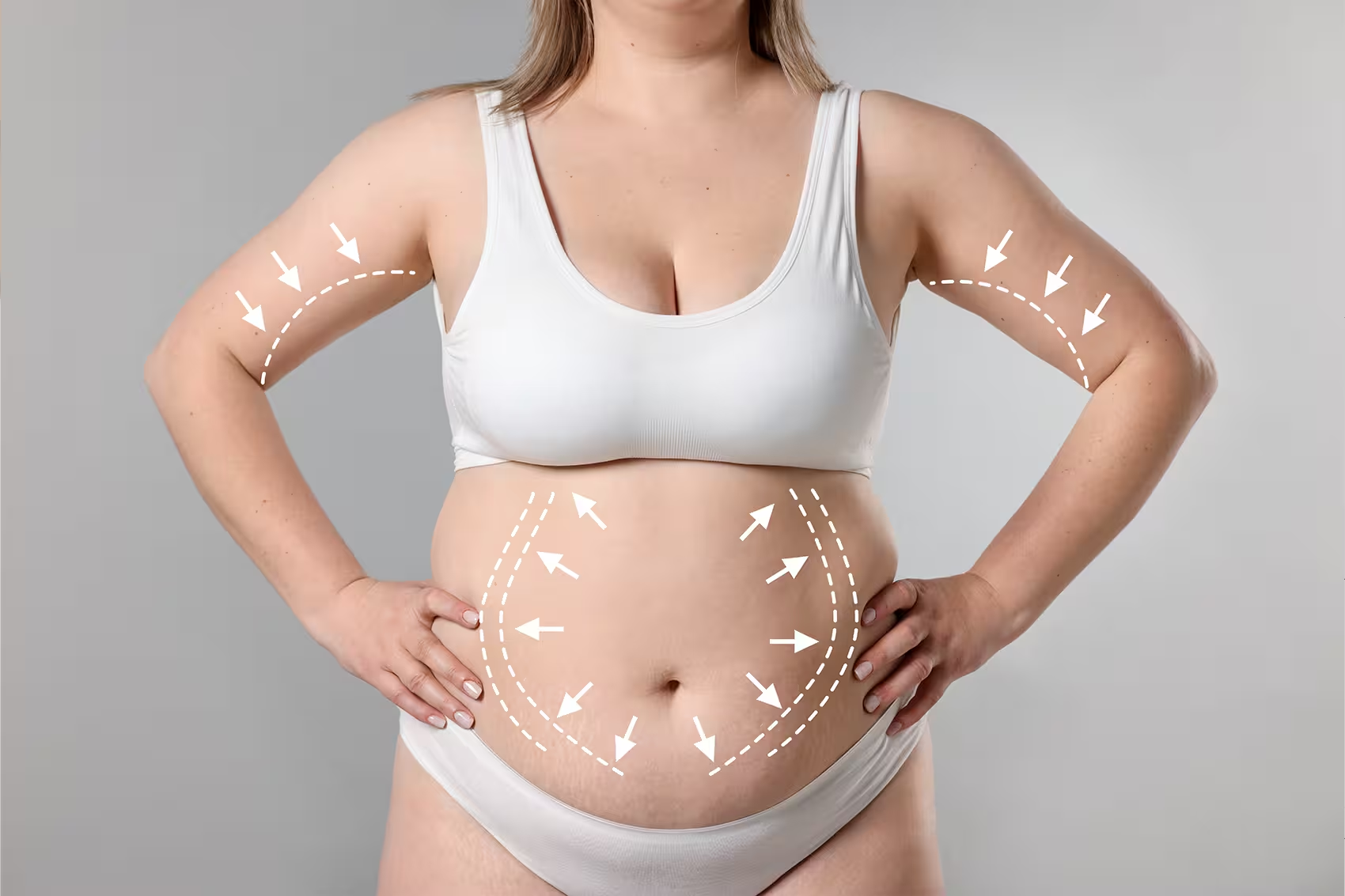
This liposuction Turkey guide explains how liposuction works, who it suits, what recovery looks like, and what to ask before you choose a surgeon in Istanbul. Liposuction is a surgical procedure that removes excess fat from specific areas of the body. It is used to reshape areas where diet and exercise have not worked, such as the abdomen, hips, thighs and buttocks.
The guide is written by the team of Prof. Dr. Özgür Pilancı, a plastic surgeon in Istanbul, using information from the NHS and the American Society of Plastic Surgeons (ASPS). It is general information, not medical advice. Your own plan depends on a personal assessment.
What Is Liposuction?
Liposuction, also called lipoplasty, removes small areas of fat that are hard to lose through exercise and a healthy diet. It is carried out on areas where fat tends to collect, such as the abdomen and waist, hips, thighs and buttocks. Other areas that can be treated include the back, upper arms, inner knees, chest, and the chin and neck.
The aim is to change body shape. According to the NHS, results are generally long-lasting provided you maintain a healthy weight.
What Liposuction Cannot Do
Liposuction is not a treatment for obesity and it is not a substitute for diet and exercise. It also does not remove cellulite or stretch marks. It works best for people who are not overweight and who have firm, elastic skin. If the skin is soft and thin, for example after weight loss, pregnancy or ageing, it may not reshape as well. In that case, extra surgery to remove and tighten skin may be needed. See our tummy tuck guide for how skin removal differs from fat removal.
Who Is a Good Candidate for Liposuction in Istanbul?
Your surgeon will decide at an assessment. In general, a good candidate:
- Is close to a stable, healthy weight
- Has localised pockets of fat that have not responded to diet and exercise
- Has reasonably firm, elastic skin
- Is in good general health and does not have conditions that raise surgical risk
- Has realistic expectations about what the procedure can achieve
Areas That Can Be Treated With Liposuction
- Abdomen and waist
- Hips and buttocks
- Thighs and inner knees
- Back
- Upper arms
- Chest area
- Calves and ankles
- Face, cheeks, chin and neck
Liposuction can be done on its own or together with other procedures, such as a facelift, breast reduction or tummy tuck.
Liposuction Techniques: Standard, Laser and Ultrasound-Assisted
All forms of liposuction use a thin suction tube (cannula) placed through small cuts in the skin. The main difference is how the fat is loosened first.
- Traditional liposuction: the surgeon moves the cannula back and forth to loosen the fat and suction it out.
- Laser- and ultrasound-assisted liposuction: energy from a laser or ultrasound is used to liquefy the fat before it is removed. The NHS also describes high-pressure water jets as another way to break up fat.
You may see brand names such as VASER used by clinics. VASER is a brand name for an ultrasound-assisted technology. A brand name does not by itself tell you how safe or effective a technique will be for you, so ask your surgeon which method they recommend and why.
What does “360 liposuction” mean?
Some clinics use the term 360 liposuction for treating the abdomen, waist, flanks and back in one session. It is a marketing term, not a formal medical category. Ask exactly which areas are included so you know what you are being offered.
How the Liposuction Procedure Works
According to the NHS, liposuction is usually carried out under general anaesthesia, although an epidural may be used for lower parts of the body. The surgeon:
- Marks the area to be treated on your body
- Injects the area with a solution containing anaesthetic and medicine to reduce blood loss, bruising and swelling
- Breaks up the fat cells where needed (for example with ultrasound, a laser pulse or a water jet)
- Makes a small cut and inserts a suction tube attached to a vacuum machine, moving it back and forth to remove the fat
- Drains excess fluid and blood, then closes and bandages the area
The NHS states this usually takes 1 to 3 hours. The ASPS notes that liposuction is typically an outpatient procedure, but if a significant amount of fat is removed, an overnight hospital stay may be needed for observation. Your surgical team will advise what applies to you.
Before You Travel: Preparation Checklist
- Share your full medical history, medicines and previous operations with your surgeon
- Ask which medicines and supplements to stop before surgery
- Arrange someone to take you home after surgery and to stay with you for the first 24 hours (as the NHS advises after a general anaesthetic)
- Plan help at home for the first days and weeks
- Ask how long you should stay in Istanbul before flying home, and do not fly until you are cleared
Liposuction Recovery: What to Expect
Recovery varies with age, health and how much of the body was treated. The timeline below is a general guide based on NHS and ASPS information. Your surgeon’s instructions always come first.
| Time | What many patients experience |
|---|---|
| First days | Moderate pain and soreness, managed with pain medicine. You will wear a compression garment or bandages. Rest is important, and you will need help at home. |
| Week 1–2 | Pain usually reduces noticeably. Stitches that are not dissolvable are removed after about a week (NHS). Many people return to work after around two weeks, though physical jobs may need longer (ASPS). |
| Week 3–4 | Soreness usually settles. Some gentle exercise is possible at around 3 to 4 weeks (NHS). Heavy or strenuous activity is still avoided. |
| About 6 weeks | Most bruising and swelling has gone down, though some swelling can linger (ASPS). Many patients no longer need the compression garment, as advised by their surgeon. |
| 10–12 weeks | The NHS advises avoiding strenuous activity for 10 to 12 weeks. Always check with your surgeon first. |
| Up to 6 months | It can take up to 6 months for the area to settle completely (NHS). Results become clearer as swelling goes down. |
Wear your compression garment as instructed, walk gently as advised, and attend follow-up checks.
Liposuction Side Effects and Risks
Common after liposuction, according to the NHS: bruising and swelling (which can last up to 6 months), numbness that usually goes away within 6 to 8 weeks, scars, inflammation of the treated area, fluid coming from the cuts, and swollen ankles if the legs are treated.
Less commonly, liposuction can cause:
- Lumpy or uneven results
- Bleeding under the skin (haematoma)
- Numbness that lasts for months
- Changes in skin colour in the treated area
- Fluid build-up in the lungs (pulmonary oedema) from the fluid injected during the procedure
- A blood clot in the lungs (pulmonary embolism)
- Damage to internal organs during the procedure
As with any operation, there is also a small risk of excessive bleeding, a blood clot in a vein, infection, and an allergic reaction to the anaesthetic. Sometimes the desired effect is not achieved and a further operation is considered. Your surgeon should explain how likely these risks are and how they would be treated.
What do the numbers say?
A 2015 ASPS-published analysis of more than 4,500 liposuction patients in a US database found an overall complication rate of 1.5%, with few serious complications and no deaths, and major complications in fewer than 1 in 1,000 patients. The most common complication was a collection of fluid under the skin (seroma) needing drainage. Patients who had more than 5 litres removed had a higher overall complication rate (3.7% versus 1.1%), mostly because of more seromas. The researchers stressed that this is a relative guide, not an absolute limit, and that length of surgery, other procedures and the patient’s health also matter. These figures come from one US study and cannot predict your own risk.
How Long Do Liposuction Results Last?
Fat cells that are removed do not come back in the treated area, and the NHS states results are generally long-lasting if you maintain a healthy weight. Weight gain can still change your shape, including in other areas of the body. A stable weight is the best way to protect your result.
Liposuction Cost in Turkey
The cost of liposuction in Turkey depends on several things:
- How many areas are treated and how large they are
- The technique used
- Whether other procedures are combined
- The hospital and length of stay
- What the package includes, such as tests, medicines, compression garments, transfers and follow-up
Because every patient is different, the clinic provides a personalised quote after reviewing your photos and medical history. When comparing offers, check exactly which areas are included and ask who covers complications and follow-up care.
Why Choose Istanbul for Liposuction?
Istanbul is a major destination for medical travel, with hospitals experienced in treating international patients and direct flights from many countries. When you consider liposuction in Istanbul, base your decision on the surgeon and hospital, not only on convenience or price.
What to check before you book
- Is the surgeon a qualified plastic surgeon, and can you verify it?
- Does the surgery take place in a licensed hospital?
- Can you speak with the surgeon directly before travelling?
- Are results of patients with similar body types shown honestly, at different time points?
- How many areas will be treated, and with which technique?
- What is the plan for follow-up after you go home?
The NHS also suggests asking how many procedures a surgeon has performed where there were complications, what follow-up to expect if things go wrong, and what their patient satisfaction rates are.
Liposuction Before and After
When you look at before and after photos, compare patients who started from a similar body type and skin quality to yours, and look for photos taken at several stages. Early photos show swelling, and the final result appears months later. You can view examples on our before and after results page. Individual results vary.
Liposuction and Other Procedures
Liposuction is often combined with other operations. If you have loose skin as well as fat, a tummy tuck may be recommended instead of, or together with, liposuction. Read about related options on our body contouring page. Combining procedures can add to operating time and recovery demands, so your surgeon will decide what is safe for you.
Liposuction Turkey: Frequently Asked Questions
Is liposuction a weight loss treatment?
No. Liposuction is not a treatment for obesity or a substitute for diet and exercise. It reshapes specific areas in people who are near a stable weight.
Does liposuction remove cellulite or stretch marks?
No. According to the NHS and ASPS, liposuction does not treat cellulite or stretch marks.
How long does liposuction take?
The NHS states liposuction usually takes 1 to 3 hours. The time depends on the areas treated.
Is liposuction painful?
You can expect moderate pain and soreness in the first days, which is managed with pain medicine prescribed by your surgeon.
How long is recovery after liposuction?
Many people return to desk work after about two weeks, and most bruising and swelling settles by around six weeks. The NHS says it can take up to 6 months for the area to settle completely, and strenuous exercise is usually avoided for 10 to 12 weeks. Follow your surgeon’s advice.
Is liposuction in Turkey safe?
Safety depends on patient selection, the surgeon’s qualifications, the amount of fat removed, the hospital and aftercare, not on the country alone. Verify the surgeon and hospital and ask about follow-up before you travel.
What is the difference between liposuction and a tummy tuck?
Liposuction removes fat. A tummy tuck removes excess skin and can tighten separated muscles. Some patients need one, some need both. Your surgeon will advise.
What is 360 liposuction or VASER liposuction?
“360 liposuction” is a clinic term for treating several areas around the midsection in one session. VASER is a brand name for an ultrasound-assisted technology. Ask your surgeon exactly which areas and which technique are being proposed for you.
How much does liposuction cost in Turkey?
It depends on the areas treated, the technique, whether other procedures are added and what the package includes. You receive a personalised quote after your consultation.
Sources and Further Reading
- NHS: Liposuction
- American Society of Plastic Surgeons: Liposuction
- American Society of Plastic Surgeons: Laser- and ultrasound-assisted liposuction
- American Society of Plastic Surgeons: What you need to know about your liposuction recovery
- American Society of Plastic Surgeons: How much liposuction is “safe”? (2015)
Your Next Step
If you are considering liposuction in Istanbul, you can request a free online consultation with Prof. Dr. Özgür Pilancı. Share your photos and questions, and the team will advise whether you may be a suitable candidate and which approach fits you.
Request a free online consultation
See also our other plastic surgery guides.
This guide is for general information and does not replace a medical consultation. Individual results vary.