What Is a Tummy Tuck?
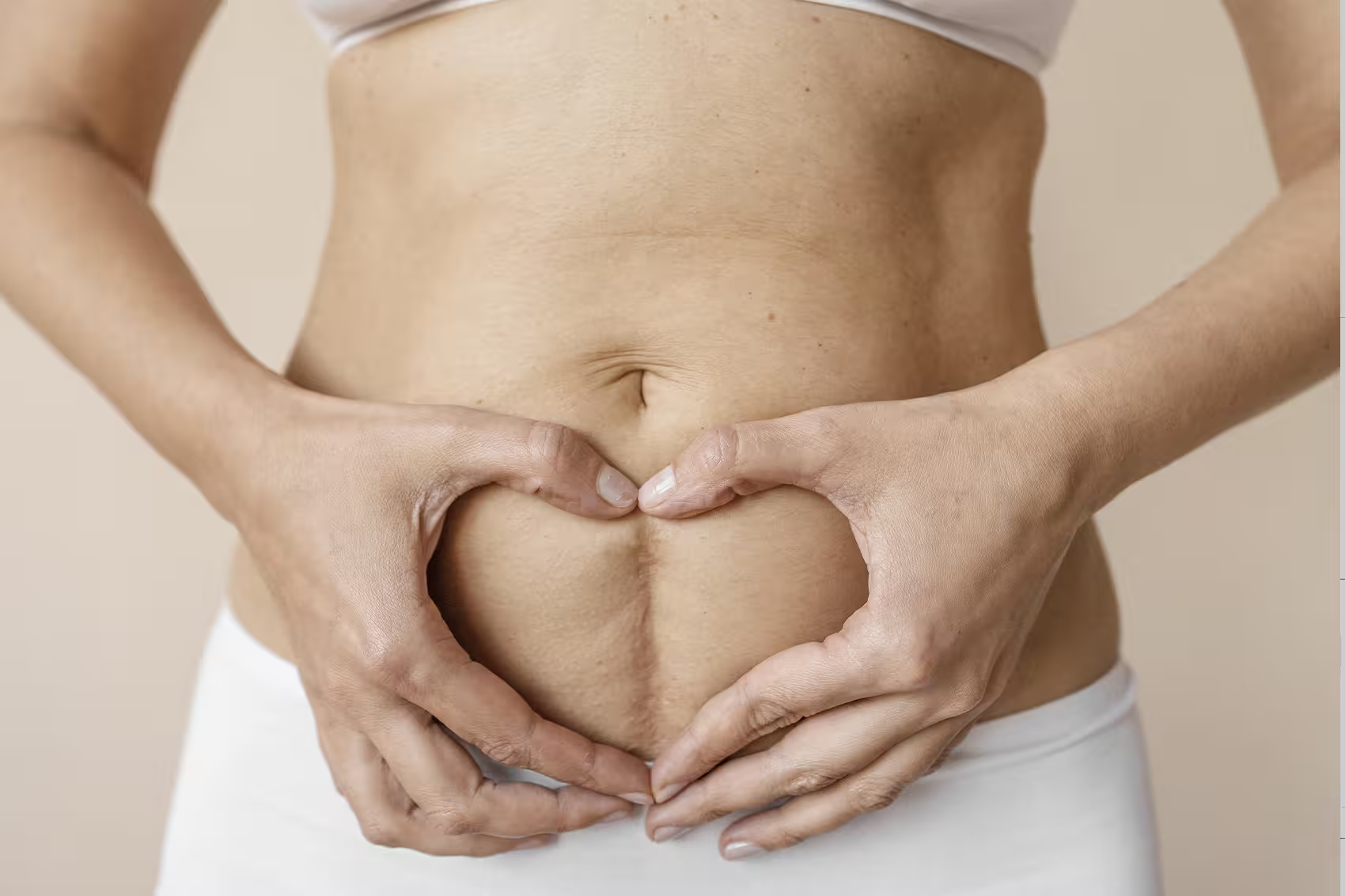
A tummy tuck — medically known as abdominoplasty — is a surgical procedure that removes excess skin and fat from the abdomen and, crucially, repairs the underlying abdominal wall muscles when they have separated. It is one of the most transformative body contouring procedures in plastic surgery, and one of the few that addresses a structural problem no amount of exercise or weight loss can correct.
The procedure works by making a low, horizontal incision across the lower abdomen (typically placed below the bikini line), removing the excess skin that lies between that incision and the navel, tightening the abdominal muscles if they have separated, and repositioning the navel in its correct location. The remaining skin is pulled taut and closed, producing a flat, smooth abdominal contour.
What makes abdominoplasty different from liposuction — and why they are fundamentally different procedures — is that a tummy tuck addresses skin. Liposuction removes fat but does nothing to tighten stretched or separated tissue. A tummy tuck removes the excess skin permanently and repairs the abdominal wall, producing a structural change that cannot be achieved any other way.
“No amount of exercise can tighten ripped fascia, join separated muscles, or remove loose skin. Surgery is the only thing that can actually fix this.” — Patient, Northwell Health
In 2024, the American Society of Plastic Surgeons (ASPS) reported 171,064 tummy tuck procedures in the US alone — making it the third most popular cosmetic surgery. RealSelf reports a 96% Worth It Rating. Procedures have grown 75% since 2020.
Key Facts at a Glance
| Detail | Fact |
|---|---|
| Procedure type | Surgical — general anaesthesia |
| Surgery duration | 2–4 hours (full tummy tuck) |
| Hospital stay | 1–2 nights |
| Time off work | 2–3 weeks |
| Full activity | 6 weeks |
| Exercise restriction | 8–10 weeks (abdominal exercises) |
| Final results | 6–12 months |
| Results longevity | 10+ years (stable weight, no further pregnancies) |
| RealSelf Worth It Rating | 96% |
| ASPS rank (2024) | #3 most popular cosmetic surgery in the US |
| UK cost (full) | £6,500–£12,000 |
| Istanbul cost (all-inclusive) | £2,900–£4,200 |
| Saving vs UK | 50–70% |
Who Is a Good Candidate for a Tummy Tuck?
The ideal tummy tuck candidate has excess abdominal skin and/or diastasis recti (abdominal muscle separation) that has not responded to diet, exercise, or physiotherapy. The procedure is not a solution for patients who are overweight — it is for patients who are at or near their goal weight and have structural changes that lifestyle cannot address.
Good Candidates Typically:
- Have completed their family (if applicable) — a future pregnancy can re-separate repaired muscles and stretch tightened skin
- Are at a stable weight for at least 6 months — not necessarily their lowest weight, but a maintainable baseline
- Have a realistic goal: a flat, tighter abdomen that reflects the effort they put in
- Are non-smokers, or have stopped smoking for at least 6 weeks (ideally 8 weeks) before surgery
- Are in good general health with no uncontrolled conditions that increase surgical risk
- Have excess skin that is distinct from excess fat
Patients Particularly Suited to Tummy Tuck:
- Post-pregnancy patients with diastasis recti and/or skin laxity below the navel
- Patients after significant weight loss who have loose, hanging abdominal skin
- Post-bariatric patients with skin excess concentrated in the abdomen
- GLP-1 weight loss patients (once weight is stable for 12 months and medication is paused)
- Patients with a C-section scar and overlying skin fold (“C-section shelf”)
Who May Not Be a Suitable Candidate:
- Patients who plan further pregnancies — surgery should wait until family is complete
- Patients who still need to lose significant weight
- Patients with active smoking — risk of wound healing complications is substantially elevated
- Patients with poorly controlled diabetes or other conditions affecting wound healing
Diastasis Recti: The Hidden Problem That Only Surgery Can Fix
This section addresses the most important and least-understood aspect of tummy tuck surgery — the one that explains why exercise doesn’t work, and why surgery is not optional for patients with this condition.
What is diastasis recti?
Diastasis recti is the separation of the two vertical columns of abdominal muscle (the rectus abdominis, or “six-pack” muscles) that run down the centre of the abdomen. These two columns are normally held together by a band of connective tissue called the linea alba. During pregnancy, the expanding uterus stretches and thins this connective tissue, causing the muscles to separate.
The result: a gap down the centre of the abdomen, ranging from 2–5cm or more. This gap is not a wound — the tissue doesn’t tear. But the structural integrity of the abdominal wall is lost, causing a visible and palpable bulge along the midline.
Why exercise doesn’t fix it:
Many women spend years doing core exercises trying to address their post-pregnancy abdomen — and are frustrated when nothing works. The reason is structural. You cannot strengthen a muscle that has lost its structural connection. Core exercises build muscle bulk on either side of the gap, but they cannot close the gap in the fascia. In fact, certain exercises (particularly crunches) can make diastasis recti worse.
The only way to close a true diastasis recti is surgical repair — plication of the linea alba, in which a plastic surgeon sutures the two columns of muscle back together using permanent sutures.
The functional benefits of repair:
- Lower back pain — the abdominal wall provides anterior support for the lumbar spine
- Posture — the core is the foundation of upright posture
- Pelvic floor function — abdominal wall weakness is linked to pelvic floor dysfunction in post-pregnancy patients
- Core engagement during exercise — patients often describe being able to exercise properly for the first time
“I didn’t know I had diastasis recti until I went to see a physio. It was a light bulb moment — that’s why nothing was working. Surgery was the only option.” — Patient, UK (RealSelf, 2025)
Types of Tummy Tuck: Which Is Right for You?
Not every tummy tuck is the same. The right procedure depends on the location and extent of your skin excess, whether you have diastasis recti, and what area needs addressing.
Full Tummy Tuck (Standard Abdominoplasty)
The most common type. A long horizontal incision runs hip-to-hip across the lower abdomen (positioned to fall below the bikini line). The skin between this incision and the navel is removed, the abdominal muscles are repaired if separated, and the navel is repositioned through the tightened skin. Best for: Patients with skin laxity above and below the navel, with or without diastasis recti.
Mini Tummy Tuck
A shorter incision with more limited skin removal, addressing only the area below the navel. Does not typically involve umbilicoplasty (navel repositioning) or significant muscle repair above the navel. Best for: Patients with limited excess skin confined to the lower abdomen, no or minimal diastasis above the navel. Often suitable for post-C-section patients with a “shelf” of skin above the scar.
Extended Tummy Tuck
Extends the incision around to the flanks and sometimes the lower back, allowing removal of skin from the sides and front simultaneously. Best for: Post-bariatric or significant post-weight-loss patients with skin excess extending beyond the front of the abdomen.
Fleur-de-Lis (Vertical Scar) Abdominoplasty
A modified tummy tuck that includes a vertical incision running up the centre of the abdomen in addition to the horizontal one. Allows removal of skin both vertically and horizontally. Best for: Post-bariatric patients with very large amounts of overhanging skin. The trade-off is a visible vertical scar.
| Type | Skin Addressed | Muscle Repair | Navel Repositioned | Best For |
|---|---|---|---|---|
| Mini | Below navel only | Limited | No | Mild laxity below navel |
| Full | Entire abdomen | Yes | Yes | Most post-pregnancy patients |
| Extended | Abdomen + flanks | Yes | Yes | Post-weight-loss, hip/flank laxity |
| Fleur-de-Lis | Abdomen (both directions) | Yes | Yes | Massive weight loss |
The Tummy Tuck Procedure: Step by Step
Abdominoplasty is performed under general anaesthesia, typically taking 2–4 hours for a full tummy tuck.
Pre-operative preparation (weeks before surgery):
- Stop smoking at least 6 weeks before surgery (8 weeks preferred)
- Stop blood-thinning medications and supplements (aspirin, ibuprofen, vitamin E, fish oil) 2 weeks prior — discuss with your surgeon
- Arrange childcare for weeks 1 and 2 of recovery
- Set up your recovery space at home
- Pre-operative blood tests and ECG (arranged by your Istanbul clinic)
The procedure:
- The surgical area is marked and prepared; anaesthetic is administered
- The horizontal incision is made across the lower abdomen, below the bikini line
- The skin is lifted from the abdominal wall up to the navel and above
- If diastasis recti is present, the abdominal muscles are brought back together and secured with permanent sutures (plication)
- Excess skin is removed
- The navel stalk is preserved; a new opening is created in the repositioned skin; the navel is sutured into its new position
- The incision is closed in multiple layers; drains may be placed
- A compression garment is applied immediately
You spend 1–2 nights in hospital for monitoring, then transfer to your hotel for the early recovery period.
Tummy Tuck Recovery: Week-by-Week Guide
Recovery from a full tummy tuck is the most significant aspect of the procedure for most patients. Understanding what to expect — and planning for it — is the most important thing you can do before surgery.
Before you go: Arrange childcare for at least 2 weeks — you cannot lift, drive, or manage a household. Prepare meals in advance or arrange food delivery. Set up a recovery station: recliner or elevated bed, loose clothing, entertainment within reach.
| Timeframe | What to Expect |
|---|---|
| Days 1–3 (hospital/clinic) | Post-anaesthesia recovery with compression garment and well-managed pain. Walking slowly encouraged from day 1 to prevent blood clots. |
| Days 4–7 (early recovery) | Peak swelling and discomfort. Walking slightly hunched — expected and resolves by end of week 1–2. Fatigue is significant. Drain management if applicable. |
| Week 2 | Substantially better. Swelling reduces visibly. Desk-based work possible by day 10–14. Drains typically removed around day 7–10. |
| Weeks 3–4 | Comfortable mobility returns. Cleared to drive (if not on prescription pain medication). Light walking encouraged. No lifting or strenuous activity. |
| Weeks 5–6 | Return to light daily activities. Swelling much reduced. Compression garment may now be worn only during the day. 70–80% normal. |
| Weeks 7–8 | Cleared for moderate exercise — walking, light resistance training away from the abdomen. |
| Weeks 10–12 | Return to abdominal exercises and vigorous activity with surgeon’s clearance. |
| 6–12 months | Final results as all swelling resolves. Scar maturation continues over 12–18 months. |
“Week 1 was genuinely hard. Week 3 I was standing straight. Week 6 I felt like myself. Week 12 I couldn’t believe the result.” — Patient, UK (RealSelf, 2025)
Tummy Tuck Scar: What to Expect and How to Manage It
The scar is the most frequently cited pre-surgery concern for tummy tuck patients. Standard placement is designed to fall within or below the bikini line — hidden by underwear, swimwear, and clothing.
The scar maturation timeline:
| Timeframe | What the Scar Looks Like |
|---|---|
| Weeks 1–4 | Pink/red, raised, tender — early healing; not representative of the final result |
| Months 2–3 | May appear to worsen slightly (peak inflammation phase) — normal |
| Months 4–6 | Flattening and beginning to fade from pink to lighter pink |
| Months 9–12 | Significantly flatter and paler — approaching its final appearance |
| 12–18 months | Final appearance: flat, white/silver, fine line — often barely visible |
Scar management protocol:
- Silicone sheets or gel — applied from week 3–4 (once healed), worn for several months. The most evidence-based scar management intervention.
- SPF 50+ sun protection — scars exposed to UV before full maturation will hyperpigment. Protect rigorously for 12 months.
- Gentle massage — from around week 6 to help soften and flatten the scar
- Avoid tension — the compression garment and avoiding strenuous activity both reduce tension on the healing wound
A tummy tuck does produce a permanent scar. Any surgeon who promises an invisible scar is misleading you. The trade-off: a long, hidden scar in exchange for a flat abdomen. The vast majority of patients at 12 months report the scar was far less significant than they feared.
“I was so anxious about the scar. Now, at 14 months, it’s a thin white line that sits inside my bikini. I barely notice it.” — Patient, UK (RealSelf, 2025)
How Long Do Tummy Tuck Results Last?
Tummy tuck results are among the most durable of any aesthetic procedure. Here is an honest breakdown by component:
| Component | Longevity | What Can Affect It |
|---|---|---|
| The muscle repair (diastasis correction) | The most permanent component. Sutures used to repair the abdominal wall are permanent. | Future pregnancy can re-separate repaired muscles |
| The skin removal | Skin removed does not grow back. Permanent. | Significant weight gain can stretch remaining skin |
| Liposuction component (if included) | Fat cells removed do not regenerate. | Remaining fat cells can expand with significant weight gain |
With stable weight and no future pregnancies, a tummy tuck is one of the most durable aesthetic procedures available. Most patients describe results lasting well over a decade. The procedure is not a “maintenance” procedure — it is a one-time structural correction.
Tummy Tuck Risks and Safety
Abdominoplasty is major surgery and carries real risks that every patient should understand before proceeding.
Common and expected (part of recovery, not complications):
- Swelling — peaks at days 3–5; can persist for several months
- Bruising — resolves over 2–3 weeks
- Numbness — the skin of the lower abdomen may feel numb for months; sensation returns gradually
- Tightness — the abdomen feels tight for 6–8 weeks as tissue adjusts
Potential complications:
- Blood clots (DVT/PE) — Tummy tuck carries an elevated blood clot risk. Risk is mitigated by compression stockings, pneumatic compression devices during surgery, early ambulation post-operatively, and prophylactic anticoagulants where indicated.
- Seroma — A collection of fluid under the skin. Drains are used to prevent seromas; when they occur, they are typically managed with aspiration in the clinic.
- Wound healing problems — Particularly at the corners of the incision or around the navel. Smoking significantly increases this risk. Patients must be fully nicotine-free before surgery.
- Infection — Managed with prophylactic antibiotics and meticulous hygiene during recovery.
- Asymmetry or contour irregularities — Often resolves as swelling settles. Significant asymmetry may require minor revision.
- Scar quality — Dependent on genetics, technique, and adherence to management protocols.
Special note for GLP-1 patients: Research published in the Aesthetic Surgery Journal (2025) indicates that patients using GLP-1 medications (Ozempic, Mounjaro, Wegovy) at the time of surgery face nearly a 2x increase in hypertrophic scarring risk. Patients should pause GLP-1 medication for at least 4–6 weeks before surgery. Weight must be stable for at least 12 months before proceeding.
Tummy Tuck After Weight Loss: GLP-1, Bariatric, and the New Patient
The fastest-growing tummy tuck patient segment is not post-pregnancy — it is post-weight-loss. GLP-1 medications (semaglutide/Ozempic/Wegovy, tirzepatide/Mounjaro) and bariatric surgery have created an entirely new population of patients presenting with significant abdominal skin excess and requesting surgical removal.
Why GLP-1 weight loss leads to loose skin:
GLP-1 medications can produce weight loss of 15–25% of body weight or more over 12–24 months. The skin, which stretched to accommodate the higher weight over years, cannot retract quickly enough to follow the body’s reduction. The result — particularly in patients over 40 — is loose, overhanging skin that no amount of exercise or time will fully resolve.
When is the right time for surgery?
- Weight must be stable for at least 12 months before surgery
- GLP-1 medication should be paused at least 4–6 weeks before surgery
- BMI should ideally be under 30 at time of surgery; surgeons will assess individually
You have done the hard part. The weight loss is extraordinary. The loose skin is not a failure — it is a direct consequence of how significant your transformation was. Surgery is the appropriate and often the only effective final step.
“I lost 45kg. I did the hardest thing I’ve ever done. But my skin made me look like I hadn’t. The tummy tuck was the last step — and it was absolutely worth it.” — Post-bariatric patient, RealSelf, 2025
Tummy Tuck Cost: Turkey vs UK vs UAE
Cost is one of the most significant drivers of medical tourism for tummy tuck patients. The differential between UK and Istanbul pricing is substantial.
United Kingdom
| Provider / Tier | Cost Range |
|---|---|
| Mini tummy tuck | £4,000–£7,000 |
| Full tummy tuck (regional) | £6,500–£9,000 |
| Full tummy tuck (London premium) | £9,000–£12,000 |
| Extended tummy tuck | £10,000–£13,000+ |
Istanbul, Turkey (All-Inclusive)
| Package Type | Cost Range |
|---|---|
| Mini tummy tuck | £2,900–£3,200 |
| Full tummy tuck (clinic-based) | £3,000–£3,800 |
| Full tummy tuck (hospital-based, mid-tier) | £3,500–£4,200 |
| Extended tummy tuck | £4,000–£5,500 |
Istanbul all-inclusive packages typically cover: surgeon fee, anaesthetist, hospital stay (1–2 nights), pre-operative blood tests and ECG, compression garments, airport transfers, and a dedicated English-speaking patient coordinator. Flights from the UK are separate — typically £200–£500.
Total cost in Istanbul (including flights and hotel): approximately £3,500–£5,500 for a full tummy tuck. Saving vs UK: 50–70%.
Why the price difference is not a quality difference:
The cost differential exists because of operating costs, not surgical skill. Turkish plastic surgeons complete the same rigorous medical and postgraduate training as their European and American counterparts. Many train in Germany, France, the US, or the UK before returning to practice in Istanbul. The difference is lower overheads and a Turkish lira-denominated cost base — not lower standards.
Why Choose Istanbul for Your Tummy Tuck?
Istanbul is one of the highest-volume medical tourism destinations in the world for body contouring surgery. Turkish plastic surgeons perform significantly more abdominoplasty procedures annually than most Western counterparts — which directly translates to technical refinement.
Volume as a quality indicator:
Leading Istanbul surgeons perform 40–60 tummy tucks per month. Compare this to a typical UK private surgeon performing 5–10. Volume at this level means that technique, complication management, and outcome optimisation are being continuously refined.
International patient infrastructure:
Leading Istanbul hospitals have built the entire patient journey around international patients: English-speaking coordinators, pre-travel video consultations, airport transfers, hotel partnerships with recovery-appropriate facilities, and telemedicine follow-up when you return home. This infrastructure is genuinely better organised than most patients expect.
Safety and accreditation:
Choose a surgeon who operates in a hospital — not a clinic or day surgery centre — with intensive care capacity on-site. JCI-accredited hospitals or Turkish Ministry of Health-licensed hospitals meet the required standard. Dr. Pilancı operates at Nişantaşı Hospital, Istanbul — a fully accredited private hospital with intensive care on-site.
The travel itself:
Istanbul is 3.5–4 hours direct from most UK airports with multiple daily departures. Time zone: GMT+3 in summer. Most patients fly out, have surgery, spend 7–10 days in Istanbul for early recovery, and fly home when independently mobile. The journey is uncomplicated.
About Prof. Dr. Özgür Pilancı
Prof. Dr. Özgür Pilancı is a board-certified plastic, reconstructive, and aesthetic surgeon at Nişantaşı Hospital, Istanbul. He holds a full professorship and specialises in body contouring procedures including abdominoplasty (full, mini, and extended), with particular expertise in complex post-weight-loss and combined mommy makeover cases.
Credentials:
- Professor of Plastic, Reconstructive, and Aesthetic Surgery
- Board-certified member of the Turkish Society of Plastic, Reconstructive, and Aesthetic Surgeons (TPCD)
- Member of the International Society of Aesthetic Plastic Surgery (ISAPS)
- Operates exclusively at Nişantaşı Hospital, Istanbul — a fully accredited private hospital
International patient service: All consultations with Dr. Pilancı are available in English. A dedicated English-speaking coordinator manages the entire patient journey from initial enquiry through post-operative follow-up after your return home.
Before and After: What Realistic Tummy Tuck Results Look Like
Before and after photos are the most powerful research tool for prospective tummy tuck patients — and one of the most easily misread.
How to read a tummy tuck before and after portfolio:
- Look for patients who started from a similar baseline to yours. The most dramatic transformations in a portfolio typically represent patients with the most to gain — not the average result.
- Look for a range of timepoints. Results at 6–8 weeks post-surgery still show significant swelling. A 12-month result is the meaningful comparison.
- Look for consistent, honest photography. Well-lit, standardised, undistorted before/after comparisons are the mark of a confident and honest surgeon.
What results typically include:
- A flat, smooth abdominal contour — often with definition visible for the first time
- A fine, horizontal scar lying below the bikini line
- A repositioned navel in a natural position
- Narrower waist and improved hip-to-waist ratio (particularly if liposuction was combined)
- Visible improvement in posture and confidence in how clothing fits
Tummy Tuck Frequently Asked Questions
Can a tummy tuck fix diastasis recti?
Yes — this is one of the primary reasons patients choose abdominoplasty. The muscle repair component of a tummy tuck (plication of the linea alba) directly addresses diastasis recti by bringing the separated abdominal muscles back together and securing them with permanent sutures. It is the only effective treatment for significant diastasis recti. Exercise and physiotherapy can help manage symptoms but cannot close the gap in the fascia.
What is the difference between a full and mini tummy tuck?
A mini tummy tuck uses a shorter incision and addresses only the area below the navel — no navel repositioning or significant muscle repair above the navel. It is appropriate for patients with limited excess skin confined to the lower abdomen. A full tummy tuck addresses the entire abdomen, repairs diastasis recti throughout, repositions the navel, and removes more skin. Most post-pregnancy patients with significant diastasis recti or skin laxity above the navel require a full tummy tuck.
Can I have a tummy tuck if I’ve had a C-section?
Yes. The tummy tuck incision is typically placed at or below the C-section scar, which may be incorporated into or sit adjacent to the abdominoplasty incision. The “C-section shelf” — a fold of skin overhanging the horizontal scar — is a common specific concern that a tummy tuck directly addresses. Inform your surgeon of all previous abdominal surgeries during consultation.
Is a tummy tuck safe in Turkey?
Yes, when performed by a board-certified surgeon in an accredited hospital. The key questions: Is the surgeon TPCD-certified (or holds equivalent European/international board certification)? Does the surgeon operate in a licensed hospital with intensive care capacity — not a day surgery clinic? Can you see a substantial portfolio of results from patients with similar anatomy? Can you have a video consultation with the surgeon before travelling?
Will a tummy tuck help with back pain?
Often yes. Diastasis recti compromises the structural integrity of the anterior abdominal wall, which is a key stabilising structure for the lumbar spine. Repairing the diastasis restores anterior support and frequently produces significant improvement in lower back pain. Patients with back pain as a primary concern should mention this explicitly during consultation.
How long until I see my final result?
The silhouette improves dramatically in the first 3 months as the majority of swelling resolves. However, the truly final result — when all swelling has resolved and the scar has matured — develops over 12 months. Results at 6 weeks are not representative of the final outcome.
Can I combine a tummy tuck with other procedures?
Yes — combination with liposuction (of the flanks, thighs, or other areas) is very common and adds minimal additional recovery. Breast procedures are commonly combined as part of a mommy makeover. Brazilian butt lift can be combined if sufficient donor fat is available. Your surgeon will advise which combinations are safe given your anatomy, health status, and planned operative time (a maximum of approximately 6 hours is the usual upper limit).
Your Next Step
If you are considering a tummy tuck and want to understand whether you are a suitable candidate — and what procedure would be right for you — Prof. Dr. Özgür Pilancı offers comprehensive consultations for international patients, including video consultations via video call before you travel.
During your consultation:
- Dr. Pilancı will assess your photographs and anatomy
- He will recommend the most appropriate procedure type (mini, full, or extended)
- You will receive a transparent, all-inclusive cost breakdown
- Your questions about recovery, results, and risks will be answered honestly
There is no obligation and no fee to have a conversation.
Book a consultation: n.ozgurpilanci.com.tr | International enquiries welcome in English.