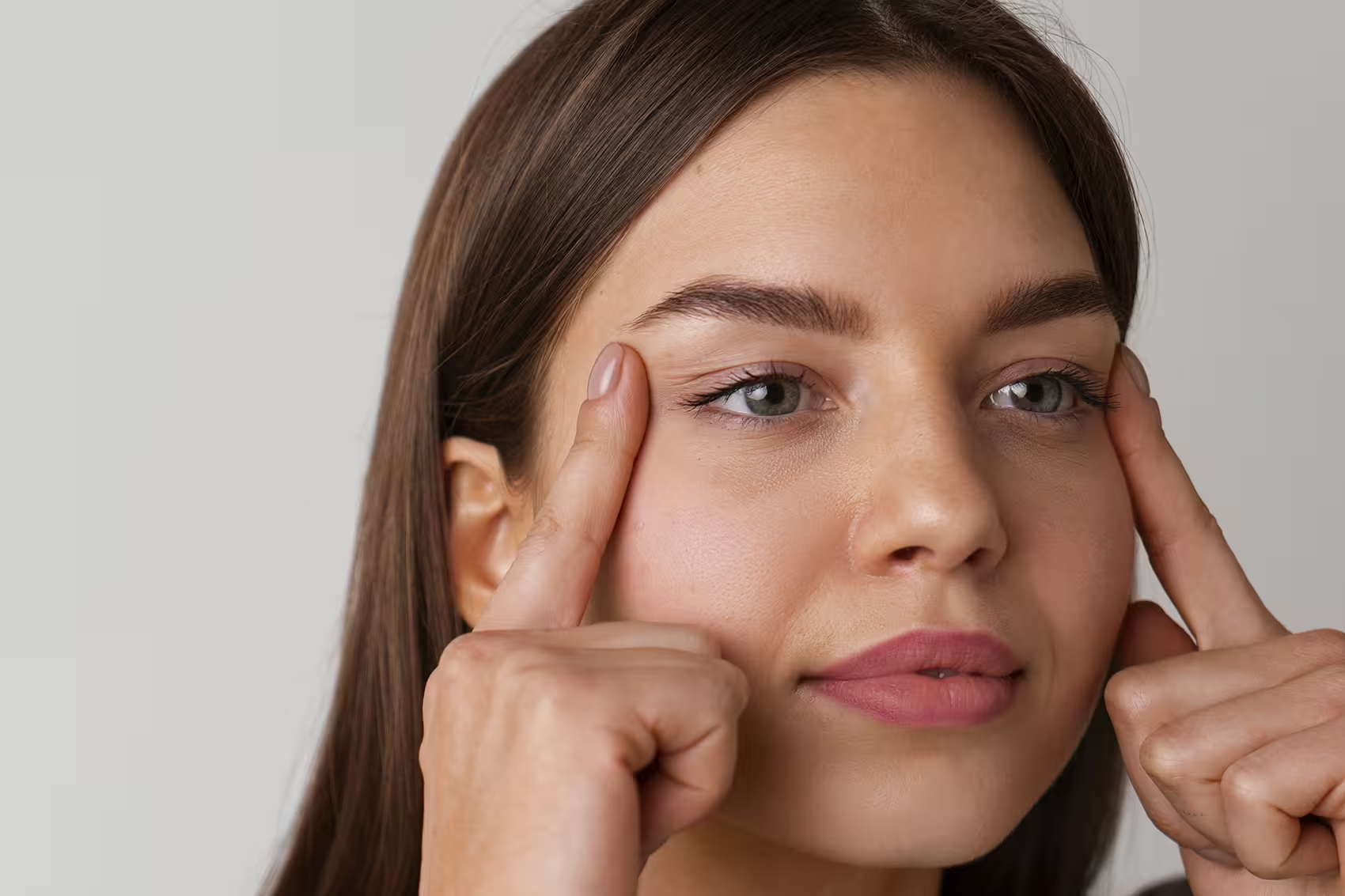
What Is a Brow Lift? Complete Guide to Forehead Lift Surgery (2026)
Your face is saying something you’re not. Patients who seek brow lift surgery almost universally share one trigger: someone asked if they were tired, upset, or angry — and they weren’t. A descending brow doesn’t just age your face; it changes how the world reads your emotions, your energy, and your approachability.
A brow lift, also called a forehead lift or browplasty, addresses exactly this. It repositions the eyebrows to their natural, youthful height, smooths deep forehead lines, and restores harmony between your upper face and the way you actually feel inside.
This guide covers everything you need to know — from the different techniques and ideal candidates to recovery, results, and why patients across the UK, Europe, and the UAE are increasingly choosing Istanbul, Turkey as their destination for this procedure with Prof. Dr. Özgür Pilancı.
What Is a Brow Lift (Forehead Lift)?
A brow lift — medically known as a browplasty or forehead lift — is a surgical procedure that elevates the position of the eyebrows and smooths the skin of the forehead. As the brow descends with age, gravity, and repetitive muscle movement, it creates a cascade of visible effects: hooded upper eyelids, deep horizontal forehead lines, vertical frown lines between the brows (the “11” lines), and a persistently tired or stern expression.
The goal of a brow lift is not dramatic change but correction — restoring the brow to a position that looks natural, rested, and open. When performed by an experienced surgeon, the results appear as though time simply reversed: fresher, more alert, and more approachable, without the “overdone” look patients often fear.
The procedure is categorised as upper facial rejuvenation surgery and is most commonly performed on patients between the ages of 40 and 60. However, younger patients (30s and early 40s) with naturally low or heavy brows benefit equally well — their concern is genetic rather than age-related.
| Detail | Information |
|---|---|
| Procedure duration | 1–2 hours |
| Anaesthesia | General or local with sedation |
| Recovery (endoscopic) | 7–10 days to work/social activities |
| Full results visible | 3 months |
| Results last | 8–12 years |
| RealSelf Worth It Rating | 88% |
Who Is a Good Candidate for a Brow Lift?
A brow lift is suitable for you if you recognise any of the following signs or situations:
Signs of Brow Descent
- Brow position that sits at or below the orbital rim (the bony ridge above the eye)
- Skin hooding over the outer third of the upper eyelid caused by a drooping brow — not excess eyelid skin
- Deep horizontal lines across the forehead from years of subconsciously raising the brows to compensate for drooping
- Vertical “11” frown lines between the brows, making you look stern or perpetually annoyed
- A persistently tired, sad, or unapproachable expression even when you feel relaxed and content
- Friends or colleagues regularly asking if you’re okay, tired, or upset when you’re feeling fine
General Candidacy Requirements
- In generally good health and physically fit for surgery
- Non-smoker, or willing to stop for at least 4 weeks before and after surgery
- Realistic expectations — wanting a refreshed, natural look, not a dramatically different face
- Have tried non-surgical options (Botox) and found the results insufficient or too temporary
Who May Not Be Suitable
- Patients whose eyelid hooding is caused entirely by excess eyelid skin (blepharoptosis) — upper blepharoplasty is more appropriate
- Patients with very high hairlines may need a specific technique to avoid raising the hairline further
- Those with significant systemic health conditions that increase surgical risk
Types of Brow Lift Techniques
Not all brow lifts are the same. The right technique depends on your anatomy, hairline height, degree of brow descent, and aesthetic goals. Your surgeon will recommend the most appropriate approach after a detailed consultation.
1. Endoscopic Brow Lift (Gold Standard — Most Recommended)
The endoscopic brow lift is the most commonly performed modern technique. Instead of a single long incision, the surgeon makes 3–5 small incisions (each under 1 cm) hidden within the hairline. A thin camera (endoscope) is inserted to visualise the tissue while specialised instruments release and reposition the brow.
- Minimal scarring — incisions are tiny and concealed in the hairline
- Shorter recovery — most patients return to social activities in 7–10 days
- Preserved hairline — no risk of pushing the hairline backward
- Proven durability — a 2025 meta-analysis confirmed sustained brow elevation of 3.25–4.35 mm long-term
Best for: Patients with mild to moderate brow descent, those concerned about scarring, and patients with normal or low hairlines.
2. Coronal (Open) Brow Lift
A single incision from ear to ear across the top of the scalp. Provides excellent access and significant lift for severe cases but has largely been replaced by endoscopic methods. Best for: patients with severe brow descent not suitable for endoscopic approach.
3. Hairline (Trichophytic) Brow Lift
Incision placed along the anterior hairline — allows the hairline to be maintained or lowered. Best for: patients with a high hairline or large forehead.
4. Temporal (Lateral) Brow Lift
A limited procedure targeting only the outer brow through small temporal incisions. Often combined with facelift or eyelid surgery. Best for: patients who primarily want the outer brow raised.
5. Non-Surgical Options (Botox / Thread Lift)
- Botox brow lift: Relaxes brow depressor muscles to allow 1–2 mm of elevation. Results last 3–4 months.
- Thread brow lift: Dissolvable sutures mechanically lift the brow. Results last 12–18 months.
Non-surgical options are appropriate for mild cases only. For moderate to significant descent, surgery delivers superior, longer-lasting results.
Brow Lift vs. Blepharoplasty — Which Do You Need?
This is the most common question patients ask, and one of the most important to answer correctly — because choosing the wrong procedure delivers disappointing results.
The key diagnostic question: Is the hooding of your eyelids caused by excess eyelid skin, or by a descending brow pushing skin downward over the lid?
| Brow Lift | Upper Blepharoplasty | |
|---|---|---|
| Treats | Descending brow position | Excess upper eyelid skin |
| Addresses | Forehead lines, “11” lines, low brow | Droopy or puffy upper lids |
| Incision location | Hairline or scalp | Eyelid crease (hidden) |
| Affects hairline | Possible (technique-dependent) | No |
| Recovery | 7–14 days | 7–10 days |
| Best for | Brow ptosis, tired/angry expression | Skin excess on lids, puffy upper lids |
The Brow Elevation Test
When you manually elevate your brow by 1–2 cm, does the eyelid hooding significantly improve? If yes, you likely need a brow lift. If hooding remains despite brow elevation, upper blepharoplasty is more appropriate. Many patients benefit from both procedures performed in a single surgical session.
A critical caution: correcting eyelid skin when the problem is actually brow descent leads to poor long-term outcomes. The brow will continue to descend, making the eyelid look unnatural over time.
The Brow Lift Procedure: What to Expect Step by Step
Pre-Operative Preparation
Your surgeon will conduct a thorough consultation assessing brow position, forehead anatomy, hairline height, skin quality, and facial proportions. You’ll be advised to:
- Stop smoking at least 4 weeks before surgery (smoking significantly impairs wound healing)
- Discontinue blood-thinning medications (aspirin, ibuprofen, certain supplements) 2 weeks prior
- Avoid eating or drinking from midnight the night before (general anaesthesia requirement)
- Arrange transport and ensure someone is with you for the first 24 hours post-surgery
- Undergo pre-operative blood tests and medical evaluation as requested
Day of Surgery — Endoscopic Technique
A brow lift is typically performed under general anaesthesia or local anaesthesia with sedation. Duration: 1–2 hours for a standalone brow lift. The step-by-step process:
- 3–5 small incisions (each ~1 cm) made within the hairline at planned positions
- Endoscope inserted — surgeon views the operating field via monitor for precision
- Forehead tissue gently lifted and released from underlying periosteal attachments
- Corrugator and procerus muscles (responsible for “11” frown lines) carefully modified
- Brow repositioned at optimal height and secured with dissolvable sutures or fixation devices
- Incisions closed with sutures or staples; light dressings applied
Post-Operative
You’ll be monitored for 1–2 hours before discharge. Most patients go home the same day (day surgery). International patients typically remain in Istanbul for 5–7 days before flying home. Mild swelling, tightness, and bruising around the forehead and eyes are expected immediately after surgery.
Brow Lift Recovery: Timeline and Tips
| Timeframe | What to Expect |
|---|---|
| Days 1–3 | Forehead tightness, mild to moderate swelling, bruising around the eyes. Cold compresses essential. Sleep with head elevated on two pillows. |
| Days 4–7 | Swelling peaks then begins to subside. Bruising may migrate downward. Light indoor activities comfortable. Sutures/clips removed at day 7. |
| Days 7–14 | Return to work and social activities for most patients. Makeup covers residual bruising. Avoid strenuous exercise. |
| Weeks 2–4 | Continued improvement. Scalp may feel numb or tingly — normal as nerves regenerate. Hair washing resumes per surgeon’s instructions. |
| Month 1–3 | Final swelling resolves. Full results become apparent. Hairline sensation normalises. |
| Month 3–6 | Continued subtle refinement. Final long-term result established. |
Recovery Tips
- Keep head elevated for the first 5 days — significantly reduces swelling
- Apply cold compresses: ice packs wrapped in cloth, 15 minutes on / 15 minutes off
- Avoid bending forward, lifting heavy objects, or straining for 2 weeks
- Protect the forehead from sun exposure for 6+ weeks — use SPF 50+
- Do not colour or use heat styling on hair for 4–6 weeks (if coronal/hairline technique)
- Attend all follow-up appointments — your surgeon needs to monitor healing
Brow Lift Results — How Long Do They Last?
What You’ll See
- Brow position elevated to a more natural, youthful height
- Upper eyelid area more open, alert, and refreshed
- Forehead lines visibly reduced or eliminated
- “11” frown lines softened if corrugator muscles were addressed
- Overall expression: rested, approachable, more energetic — not “operated on”
When You’ll See It
- Initial improvement visible as swelling subsides: day 10–14
- Noticeable improvement and social-ready: week 2–3
- Full results apparent: 3 months, when all residual swelling resolves
- Continued subtle refinement: up to 6 months
How Long Results Last
A brow lift is long-lasting but not permanent — the face continues to age naturally. Most patients enjoy results for 8–12 years. The 2025 systematic meta-analysis of endoscopic brow lifts confirmed sustained average brow elevation of 3.25–4.35 mm in long-term follow-up studies.
Factors influencing longevity: surgical technique, skin quality and genetics, consistent sun protection, healthy lifestyle (especially not smoking), and maintenance with Botox to relax brow depressor muscles and extend the surgical result.
Risks and Safety Considerations
A brow lift is a well-established, safe procedure when performed by a board-certified plastic surgeon in an accredited facility. As with any surgery, risks exist and must be understood before proceeding.
Common and Expected (Temporary)
- Swelling and bruising — expected, resolves in 1–3 weeks
- Scalp numbness or tingling — common; typically resolves over weeks to months as nerves regenerate
- Itching during healing — normal part of the tissue repair process
- Temporary hair thinning near incisions — usually resolves; permanent hair loss is rare (2.8% for endoscopic technique)
Uncommon But Possible
- Asymmetry — usually minor and improves as swelling resolves; persistent asymmetry is rare
- Infection — low risk with appropriate peri-operative care and antibiotic prophylaxis
- Visible scarring — minimised with endoscopic technique; coronal scars are longer but concealed by hair
Rare
- Nerve injury — temporary or permanent weakness in forehead movement is very rare with experienced surgeons; most temporary cases resolve naturally
- “Surprised” or over-elevated look — caused by over-correction; avoided by choosing a surgeon whose aesthetic philosophy prioritises natural results
Reducing Your Risk
- Choose a board-certified plastic surgeon with verifiable brow lift experience and a documented portfolio
- Disclose all medications, supplements, and health conditions at your consultation
- Follow pre- and post-operative instructions with precision
- Ensure the facility is hospital-grade with full anaesthesia and emergency capabilities
How Much Does a Brow Lift Cost?
Brow lift pricing varies significantly by country, technique, and clinic. Understanding the cost landscape helps international patients make an informed, value-driven decision.
| Country / Region | Typical Cost Range | Notes |
|---|---|---|
| United Kingdom | £6,000 – £10,000 | London specialists up to £12,000+; NHS does not fund cosmetic lifts |
| United States | $4,400 – $16,000 | ASPS 2024 national average approx. $5,460 |
| Western Europe (DE/NL/FR) | €5,000 – €9,000 | Germany and Netherlands among the higher-cost EU markets |
| Turkey (Istanbul) | €2,200 – €4,500 | 50–65% below UK prices; all-inclusive packages available |
What’s Included in the Cost?
- Surgeon fee
- Anaesthesiologist fee
- Hospital / clinic facility fee
- Pre-operative blood tests and medical evaluation
- Post-operative follow-up appointments
- Dressings, compression garments, and prescribed medications
Always request an itemised quote. Low headline prices that exclude anaesthesia, facility fees, or follow-up care are misleading. A transparent, all-inclusive quote allows accurate comparison.
Why Choose Istanbul, Turkey for Your Brow Lift?
Turkey has emerged as one of the world’s premier destinations for cosmetic surgery, welcoming over 1.2 million medical tourists in 2023. Patients from the UK, EU, and UAE choose Istanbul for brow lift surgery for compelling reasons:
Significant Cost Savings Without Quality Compromise
Istanbul clinics perform brow lift surgery at 50–65% below UK and Western European prices. This reflects Turkey’s favourable exchange rates, lower operational costs, and the high-volume efficiency of established medical tourism facilities — not a reduction in surgical standards or materials.
Internationally Trained, Experienced Surgeons
Turkish plastic surgeons train alongside their European and American counterparts, many holding international fellowships, board certifications, and ISAPS memberships. Prof. Dr. Özgür Pilancı is a board-certified plastic and reconstructive surgeon with specialised expertise in facial rejuvenation procedures including brow lift surgery.
Modern, Accredited Facilities
Istanbul’s leading clinics operate within JCI-accredited or equivalent hospitals, equipped with advanced imaging, modern operating theatres, and intensive care capabilities. International patient coordinators and English-speaking staff streamline every step of the process.
Comprehensive International Patient Packages
Most Istanbul clinics offer all-inclusive packages covering: VIP airport transfers, accommodation, interpretation services, pre-operative testing, surgery, recovery care, and virtual follow-up after returning home — removing the logistical complexity of having surgery abroad.
What to Look for When Choosing a Surgeon in Istanbul
- Board certification by the Turkish Plastic Surgery Association (TPCD) or equivalent
- Verifiable before/after portfolio specific to brow lift procedures
- JCI-accredited or equivalent facility
- Clear pre-operative communication protocol including video consultation
- Transparent itemised pricing — no hidden fees
- Post-operative follow-up plan including virtual consultations after returning home
Frequently Asked Questions About Brow Lift Surgery
Will I look surprised after a brow lift?
This is the most common concern — and understandable given older celebrity examples. Modern techniques, particularly endoscopic brow lifts, are designed for subtle, natural elevation. An experienced surgeon elevates just enough to restore the natural brow position, not to create an unnatural arch or permanently widened eyes. The key is choosing a surgeon whose aesthetic philosophy prioritises naturalism over dramatic results.
Is there an age limit for a brow lift?
There is no strict age limit. Most patients are 40–65, but younger patients (30s and early 40s) with naturally low or heavy brows benefit equally. Older patients in good general health are also excellent candidates. The relevant factors are facial anatomy and health status, not chronological age.
Can I combine a brow lift with other procedures?
Yes — brow lifts are commonly combined with upper blepharoplasty (eyelid surgery), facelift, or neck lift for comprehensive facial rejuvenation. Combining procedures reduces total recovery time compared to having them separately, and allows the surgeon to create a harmonious, balanced result across the entire face.
How long is the recovery from a brow lift?
Most endoscopic brow lift patients return to work and social activities in 7–10 days. Strenuous exercise is restricted for 3–4 weeks. Full results are visible at 3 months when all residual swelling has completely resolved.
What is the difference between an endoscopic and a coronal brow lift?
The endoscopic approach uses small cameras and tiny incisions within the hairline — minimal scarring, faster recovery, no hairline shift. The coronal approach uses a longer ear-to-ear incision — more access for severe cases, but longer recovery and potential hairline elevation. Endoscopic is preferred in the vast majority of modern procedures.
How long do brow lift results last?
Most patients enjoy their brow lift results for 8–12 years. A 2025 systematic meta-analysis confirmed sustained long-term brow elevation with the endoscopic technique. Many patients supplement their results with Botox injections to relax brow depressor muscles and prolong the surgical outcome.
Does a brow lift leave visible scars?
With the endoscopic technique, incisions are tiny (under 1 cm each) and placed within the hairline, making them virtually invisible once healed. Proper scar care (silicone gel, SPF) further minimises any visibility.
How much does a brow lift cost in Turkey vs. the UK?
A brow lift in Istanbul, Turkey typically costs €2,200–€4,500 all-inclusive, compared to £6,000–£10,000 in the UK — a saving of 50–65% without sacrificing surgical quality, expertise, or care standards.
Related Articles
Explore these related guides to deepen your understanding of facial rejuvenation surgery with Prof. Dr. Özgür Pilancı:
- Brow Lift in Istanbul, Turkey — What International Patients Need to Know
- Brow Lift vs. Blepharoplasty: How to Choose the Right Procedure
- Endoscopic Brow Lift: The Complete Patient Guide
- Combining Brow Lift and Facelift: Is It Right for You?
- What Is a Facelift? Complete Guide to Facial Rejuvenation
- What Is a Neck Lift? Complete Guide to Platysmaplasty
Ready to Take the Next Step?
If you’re considering a brow lift and would like to understand whether you’re a suitable candidate, Prof. Dr. Özgür Pilancı offers comprehensive consultations for international patients — including virtual pre-operative assessments via video call before you travel to Istanbul.
During your consultation, Dr. Pilancı will review your photos, assess your facial anatomy, recommend the most appropriate technique, and provide a transparent, itemised treatment plan with no hidden costs.
Patients from the UK, EU, US, and UAE regularly choose Prof. Dr. Pilancı for facial rejuvenation surgery in Istanbul. Our international patient coordination team guides you through every step — from your first enquiry to your follow-up care after returning home.